

Detection and management of addictive substances
Addictive substances, whether alcohol, legal or illegal drugs, represent a major challenge for public health. Their excessive use can have serious physical and mental consequences, affecting the quality of life of individuals and those around them. In this context, it is essential to be able to detect the presence of these substances in the body at an early stage.
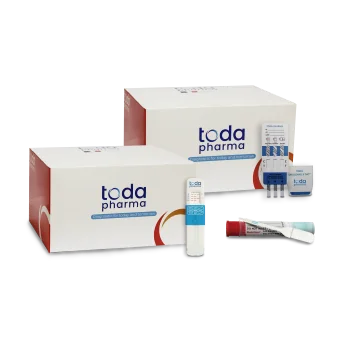
To support healthcare professionals in the management of these addictions, Toda Pharma offers diagnostic tests adapted to the detection of alcohol and drugs. These solutions accurately identify the presence of substances such as alcohol, opiates, cocaine and amphetamines. Thanks to their rapid, easy-to-interpret results, these tests make it easier to guide treatment and optimize patient care, whether for early diagnosis or ongoing monitoring.
Addictive substance identification tools
We offer a range of tests designed to accurately detect the presence of addictive substances. Adapted to a variety of medical and screening contexts, these tools provide clear results, enabling better assessment and appropriate support for patients.
Facilitate detection
Screening methods and types of drugs targeted
Drug use, whether legal or illegal, has numerous consequences for physical and mental health, workplace safety, road accidents and social cohesion. In France, it is estimated that :
- 1.4 million regular cannabis users
- 1.1 million for cocaine
- 750,000 for MDMA
- 9 million people treated with benzodiazepines
Drugs are involved in 20-30% of workplace accidents, and nearly 600,000 drug-related deaths worldwide (2024).
Toda Pharma's commitment
Toda Pharma offers a complete range of drug screening tests, tailored to the needs of healthcare professionals, companies, law enforcement agencies and specialized structures.
The aim: better detection, better prevention, better protection.
Screening methods proposed by Toda Pharma
Saliva screening
The saliva test is ideal for quick checks on the job or in the field. It detects recent drug use without intruding on the privacy of the person being tested. Quick and easy to use, it gives reliable results in just five minutes.
Benefits of saliva testing:
- Rapid, non-invasive sampling
- Results in 5 minutes
- Detection of recent consumption (last few hours)
- Can be used in the workplace without infringing on privacy
Urine screening
Recommended for medium- and long-term monitoring, the urine test can detect drug use up to several days or even weeks after use. Widely used in occupational medicine, forensic medicine and addictology, it offers a wide variety of formats to suit all contexts.
Benefits of urine testing:
- Detection of consumption up to several days or weeks after use
- Widely used in occupational medicine, legal and healthcare settings
- Reliable results thanks to high metabolite concentration
3-Threshold Testing for Cannabis (3THC)
Designed to go beyond a simple positive or negative result, the 3THC test can be used to assess THC levels in the body. It is particularly useful for monitoring withdrawal in medical or psychiatric settings, with a reading at three concentration thresholds.
Targeted drugs:
- Synthetic cannabinoids (K2, K3, K4)
- Cathinones (MCAT, MDPV, 3-MMC)
- Ketamine, Xylazine, Fentanyl, etc.
Surface drug testing
This type of test can be used to verify the presence of drug traces on suspicious objects or environments. Easy to handle, it is particularly suitable for inspections in public places, schools or businesses, and provides results in just a few minutes.
Advantages:
- Rapid analysis of drug residues on worktops, clothes, bags, etc.
- Results in 5 minutes
- Sensitivity ≥ 95%
Chemical submission tests (GHB & Ketamine)
To prevent the risk of chemical submission, Toda Pharma offers discreet tests for use on drinks. Available in card or bracelet format, these tests detect the presence of GHB or Ketamine in a matter of seconds, offering simple and immediate protection in high-risk areas.
Advantages:
- Immediate reading (less than 3 minutes)
- Card or bracelet format, easy to use
- Result by color change
Employer liability
In accordance with article 4121-1 of the French Labor Code, the employer has an obligation to ensure the safety of his employees. In the event of failure to meet this obligation, the employer may be held responsible for inexcusable misconduct and incur criminal liability. In addition, under article 1384 of the French Civil Code, employers are also liable for damage caused to third parties by employees under the influence of addictive substances. To meet these obligations, the employer may have to sanction or even dismiss the employee concerned.
The supervisor's role
The supervisor also has a key role to play in managing these situations. He or she must ensure the safety of the employee and those around him or her, by taking appropriate measures. This may include refusing access to the workstation, organizing the employee’s return home, alerting relatives or the attending physician, and drawing up a report on the incident. Upon return, the employee can be reminded of the law and receive social and medical support. The superior can also call on the occupational physician, advise the employer on the measures to be taken and, if necessary, prescribe temporary unfitness (French Labor Code, articles R4623-1 and R4624-16).
Colleagues' involvement
Finally, the employee’s colleagues also have a role to play. They must inform him of his condition, interrupt his activity if necessary and, with the agreement of a superior, help him to return home safely. This collective vigilance helps to prevent the risks associated with addictive substances and to maintain a safe working environment for all.

